

Post Departure:
My Roman Experience
During my study abroad experience in Rome, I became fascinated by the historic door knockers found throughout the city. While many people pass by these details without noticing them, I was drawn to their craftsmanship, texture, and symbolism. In The Eyes of the Skin, Juhani Pallasmaa argues that architecture should engage all of the senses rather than relying solely on vision. The door knockers I selected throughout this project embody this idea by inviting touch and creating a connection between people and architecture. Their worn surfaces, intricate forms, and handcrafted qualities reveal stories of age, use, and cultural identification. Helping to transform a simple functional object into a meaningful architectural experience.
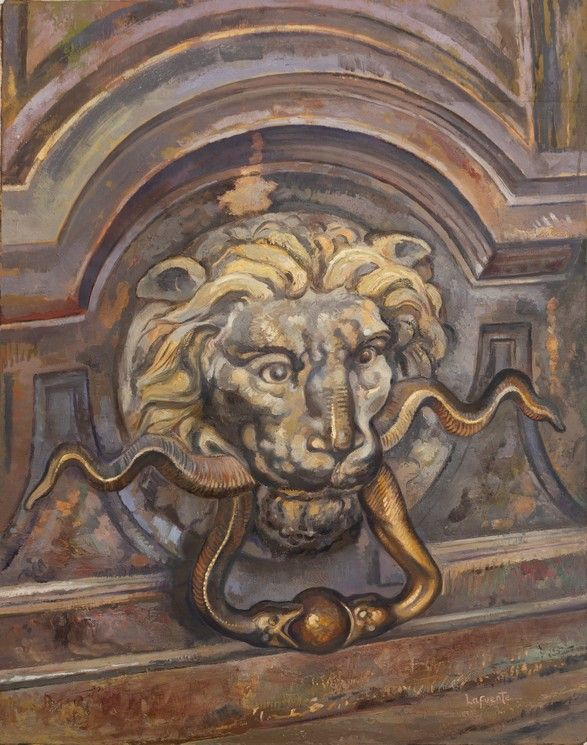
Benjamín Lafuente – Painting "Door knocker II"
WEEK 1:
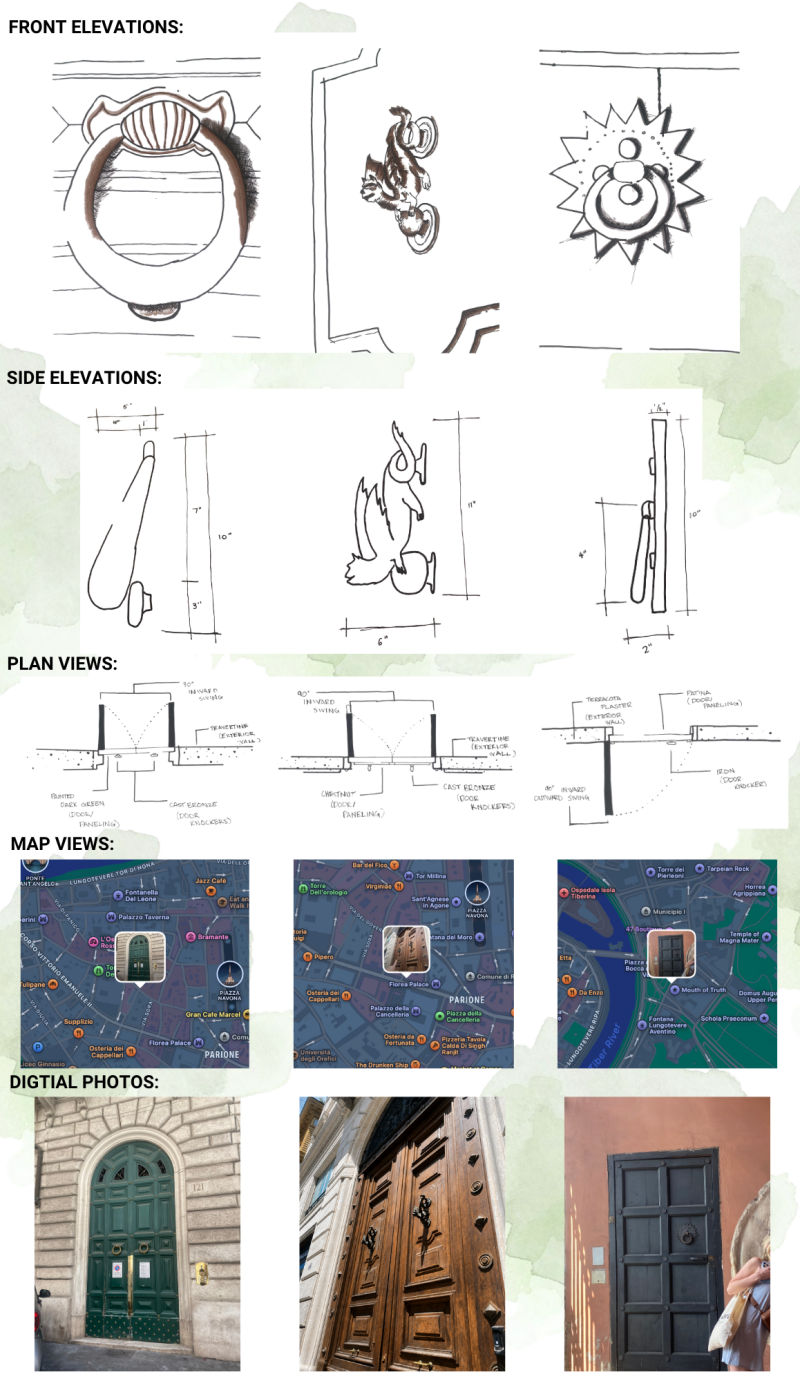
Week 2:
Touch-
The worn bronze texture of Roman door knocker's records decades of human interaction. Through touch, weight, temperature, and materiality, these objects create a sensory experience that connects people to the history and craftsmanship of the buildings.
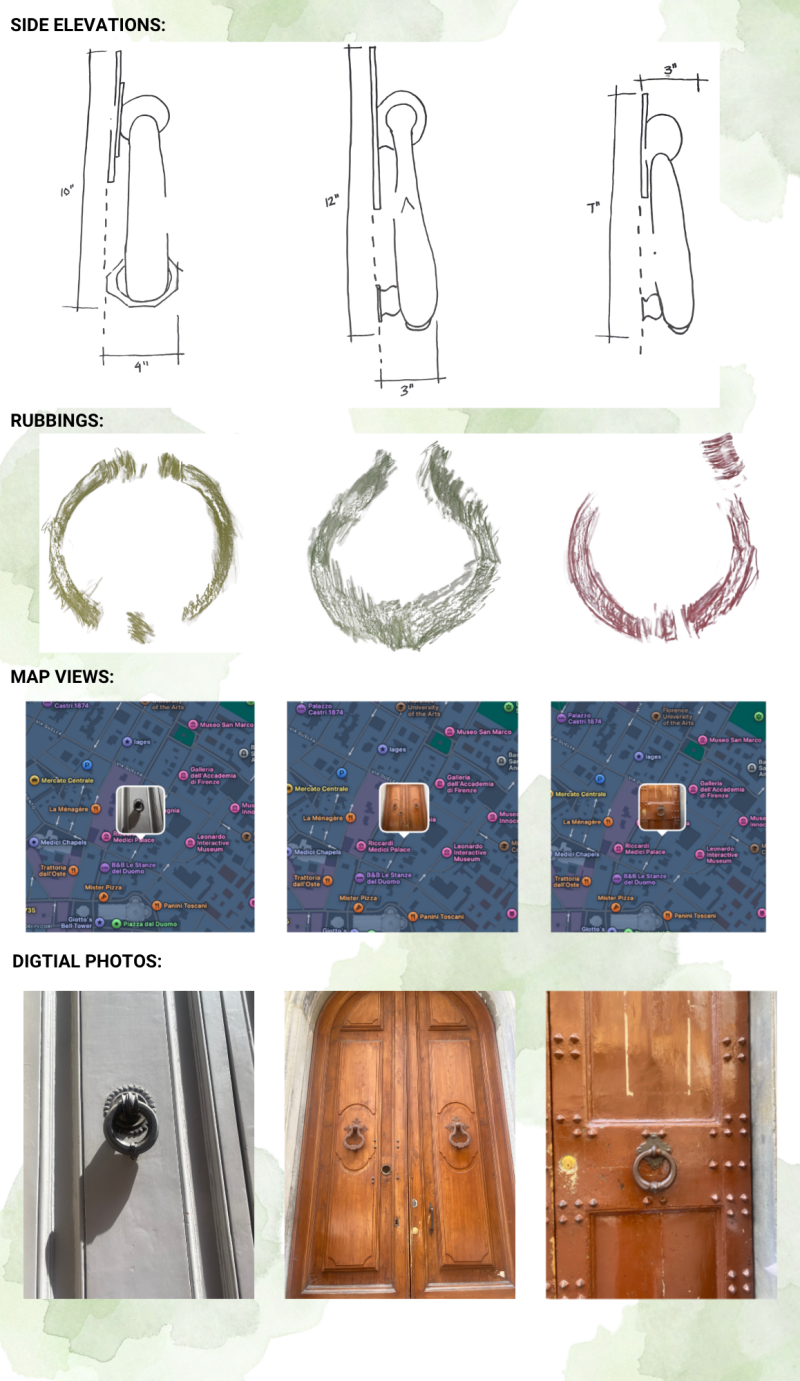
Week 3:
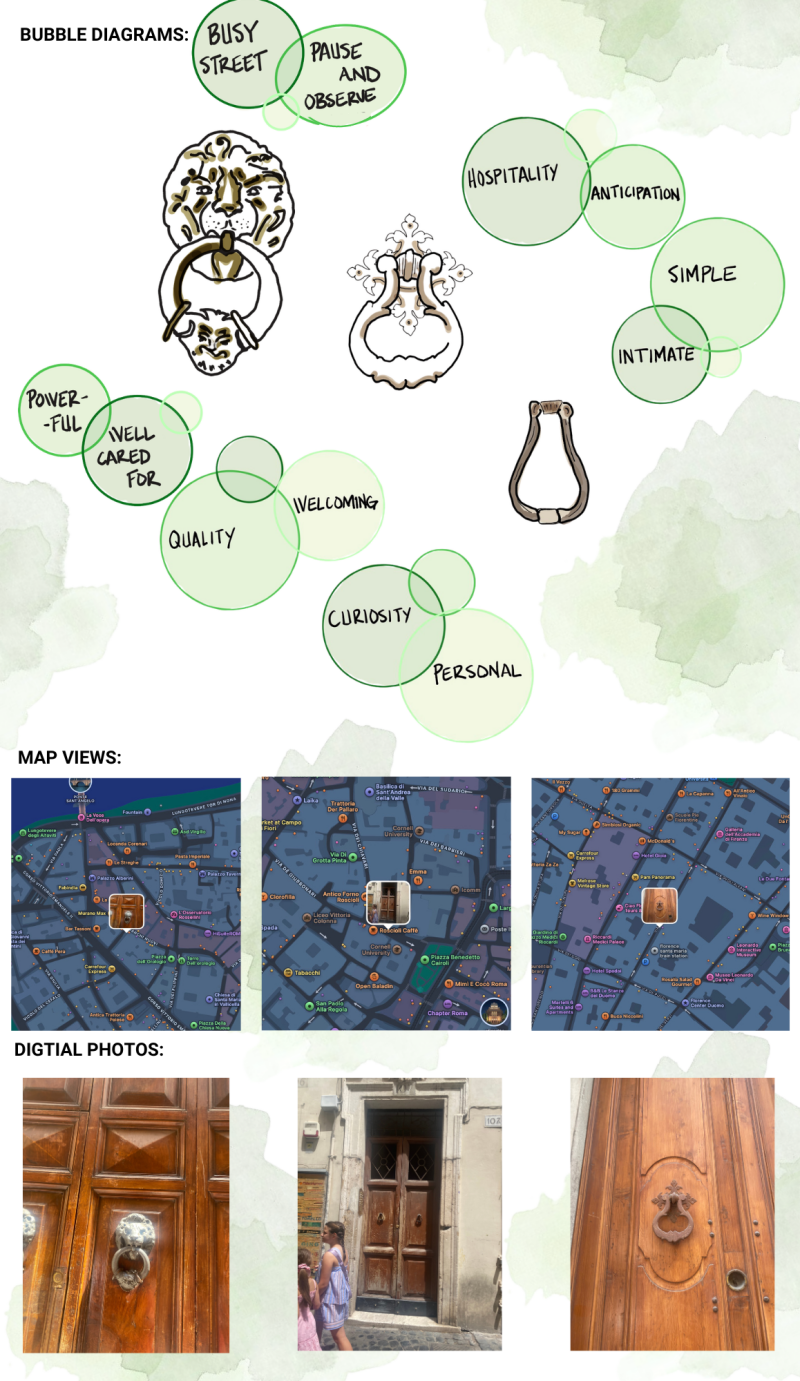
Hear-
Through hearing, the door knockers became more than decorative objects; they acted as auditory markers that announced arrival, connected people to place, and emphasized the transition between public and private space.
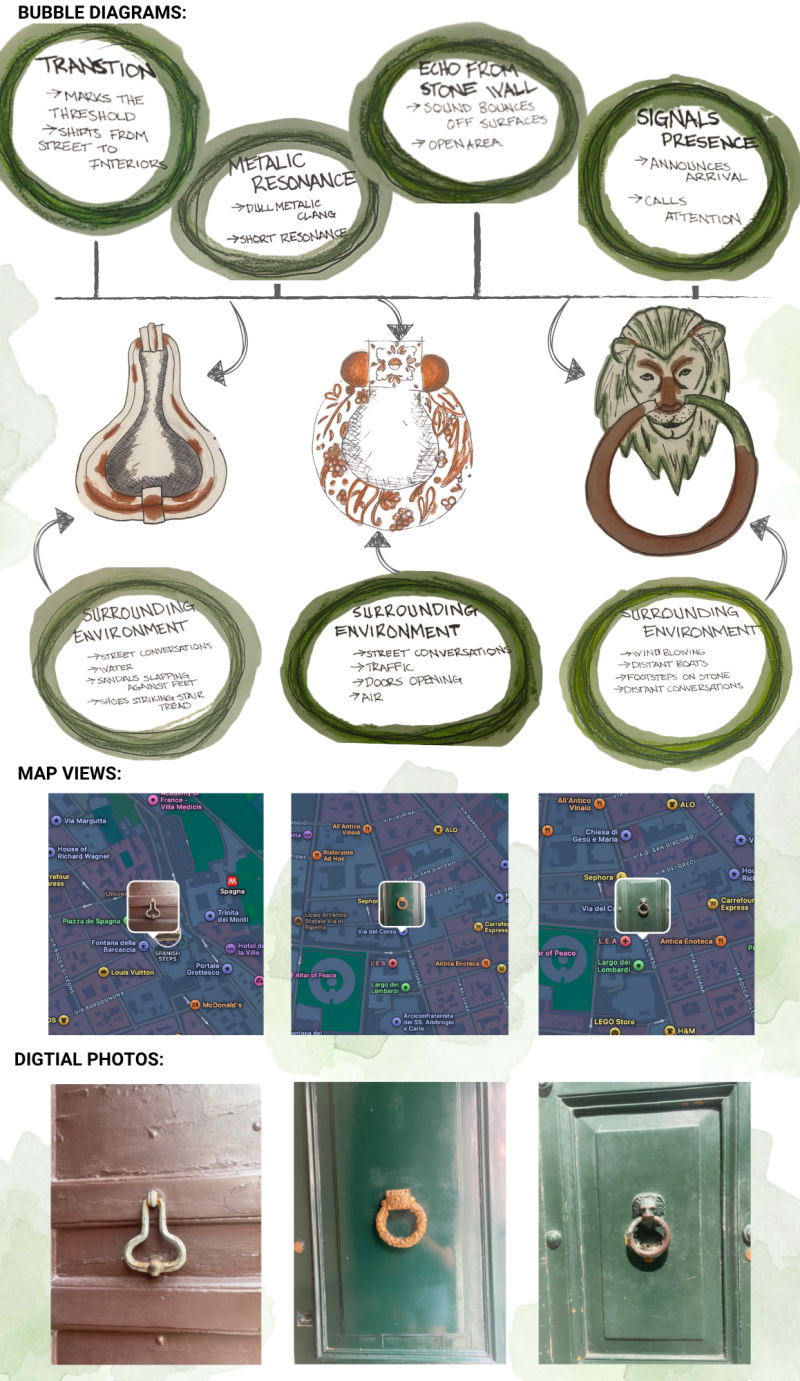
Week 4:
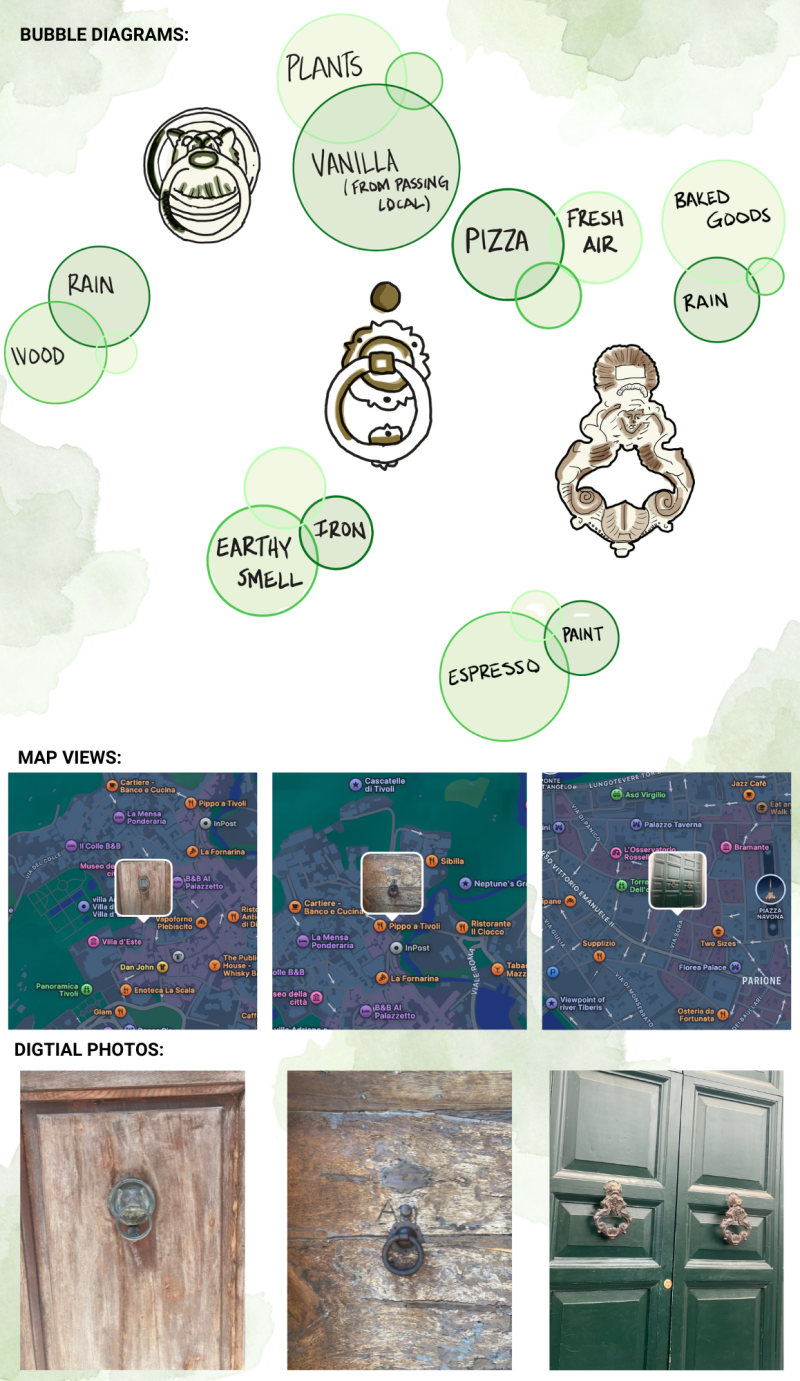
Smell and Taste-
The experience of architecture extends beyond what we see. The smells surrounding an entrance and the expectations created by its design influence how we perceive and remember a place. Door knockers become part of this sensory journey, connecting visitors to the atmosphere and experience of the building.
Week 5:
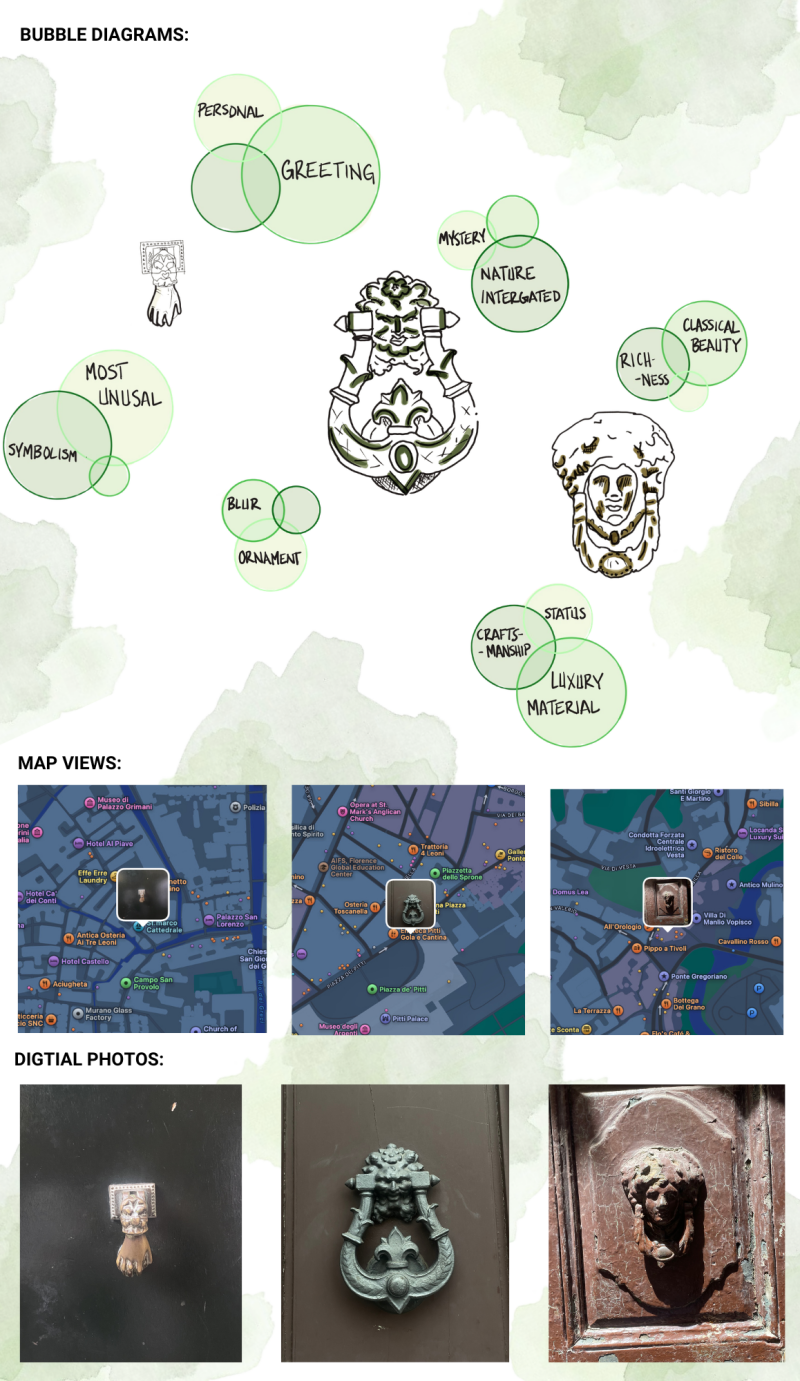
Extreme-
Door knockers range from simple functional objects to elaborate works of art. Their diverse forms demonstrate how architectural details can communicate beauty, identity, symbolism, and craftsmanship while creating a memorable first impression.
Maiolica Tile:
Studying maiolica tile in Italy changed my understanding of architecture by allowing me to experience the material firsthand. Before visiting Rome, I viewed decorative tile as simply a surface finish, but learning about its history and then creating my own hand-painted maiolica tile gave me a much greater appreciation for the craftsmanship involved. Painting my own tile showed me the patience, precision, and artistry required to produce even a single piece. Seeing authentic maiolica throughout Italy afterward made me appreciate how each tile contributes to the identity and character of a space. This experience helped me realize that materials are more than decorative elements—they tell stories, preserve tradition, and connect people to the history and culture of a place.
Travertine Case Study:
Visiting the Tivoli marble quarry and Villa d'Este changed the way I view travertine and architecture. Before this experience, I saw travertine simply as a common building material, but seeing it at its source and throughout Rome revealed how versatile and meaningful it is. I noticed how the same stone could be used for humble sidewalks and curbs, refined building facades, and monumental fountains and gardens. This case study taught me to pay closer attention to materials, craftsmanship, and context, helping me understand that architecture is shaped not only by design but also by the history and purpose of the materials that define a place.
Create Your Own Website With Webador